Chaos, a notes system for inconsistent humans
Giving up on discipline and making the system fit instead

I tried many times to build a notes system and failed every single time.
Part of it is that I lack the discipline to keep these things going. The other part is that organizing notes is deeply uninteresting. Especially when the idea isn't a project yet.
Once an idea *did* reach project status, things were fine. That threshold does a lot of work. Concrete problems create their own momentum. You open a doc, write a spec, open an IDE, and the system suddenly doesn't matter as much.
The problem is everything before that.
I kept reading about second brains. Systems that take content as input and promise to turn it into insight, output, or at least a steady stream of smart takes. Every once in a while I'd get inspired and try again. PARA. That German index card thing whose name I always forget. Notion. Obsidian. Back to Notion, because Obsidian and I were aesthetically incompatible. Then Reflect. Nothing ever stuck.
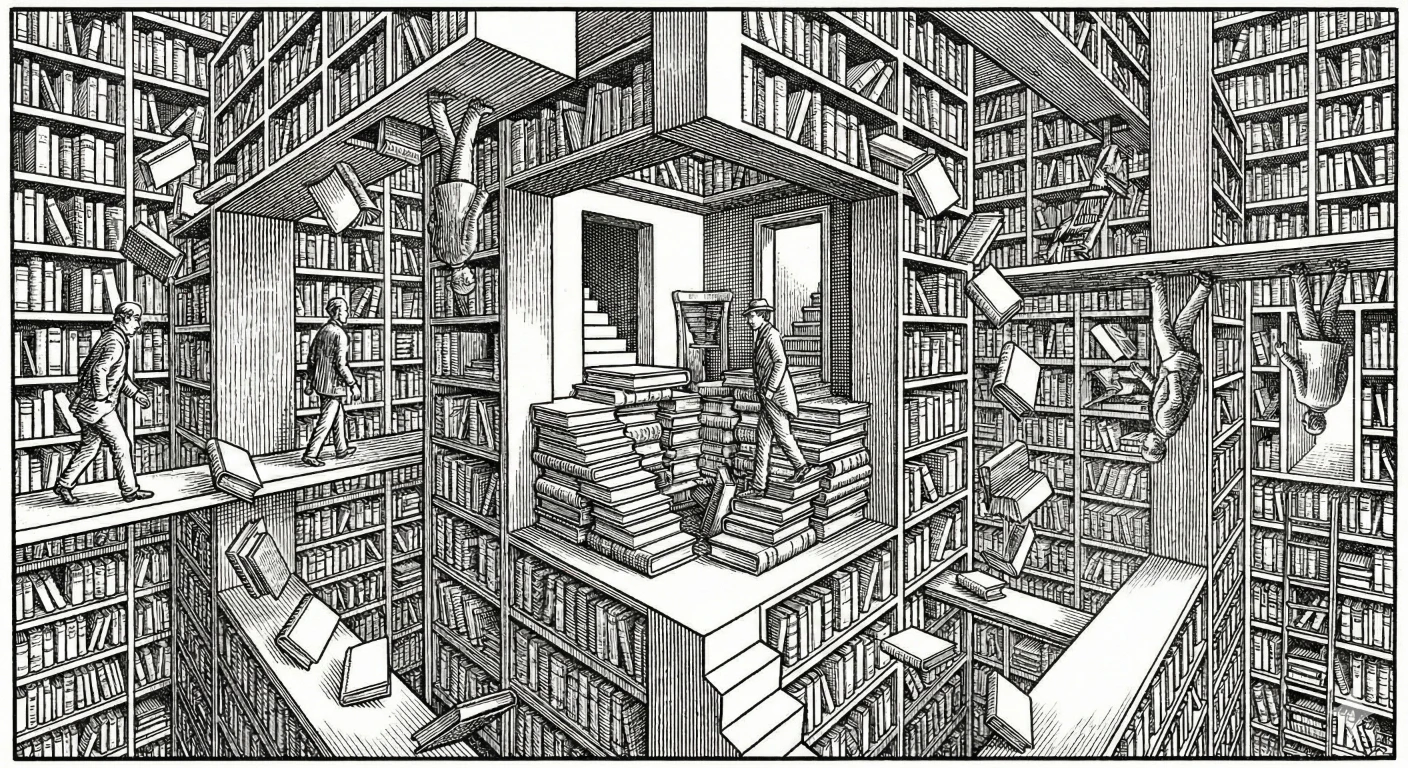
So ideas mostly lived in my head. Technical things that were immediately applicable tended to stay. Everything fuzzier got garbage collected.
I'd be reading a book, a paper book like a caveman, and a sentence would quietly rewire how I was thinking about a problem. There was absolutely no chance I was going to stop reading, open a notes app, create an entry for the book, take a photo, run OCR, fix the formatting, and then continue reading like nothing happened. I'd just keep reading and forget the quote forever.
Same with links. I'd find a tool or an article I didn't want to read right now, bookmark it, and then never think about it again. Or I'd watch a great Youtube video and think "I should take notes while this is still fresh," which is true, but also requires a level of discipline I do not possess. What I wanted was to paste the link somewhere and say something like "the part where he talks about adding starch to the water when boiling potatoes, capture that." Or maybe just paste the link and trust the system to figure out why I cared.
Capturing ideas usually requires you to stop thinking
At the exact moment when something resonates, most systems ask you to switch contexts. Decide where this goes. Log in. Organize. Sometimes fight with two-factor authentication. All I want at that moment is for the thought not to disappear so I can keep going. The more friction there is, the higher the chance I'll just not do it.
Eventually I gave up on the idea of having a personal knowledge system. I assumed I just wasn't disciplined enough, or that this was mostly a thing for people with a reason to publish constantly. What finally clicked for me wasn't about motivation at all. It was about how my attention actually works, whether I like it or not.
It doesn't do consistent. It comes in bursts. I'll be obsessed with something for a while, then vanish, then come back deeply invested in something else. Any system that depends on rhythm or upkeep eventually becomes something I forget exists.
So instead of trying to become a different person so I could fit into a system, I had the truly revolutionary idea of trying to make the system fit me instead.
The constraint at the core of Chaos is embarrassingly simple. Once something is captured, I don't want to touch it again. Categorization, linking, resurfacing, that's Chaos's problem now. My job ends at "this felt important."
Once it's captured, I'm done
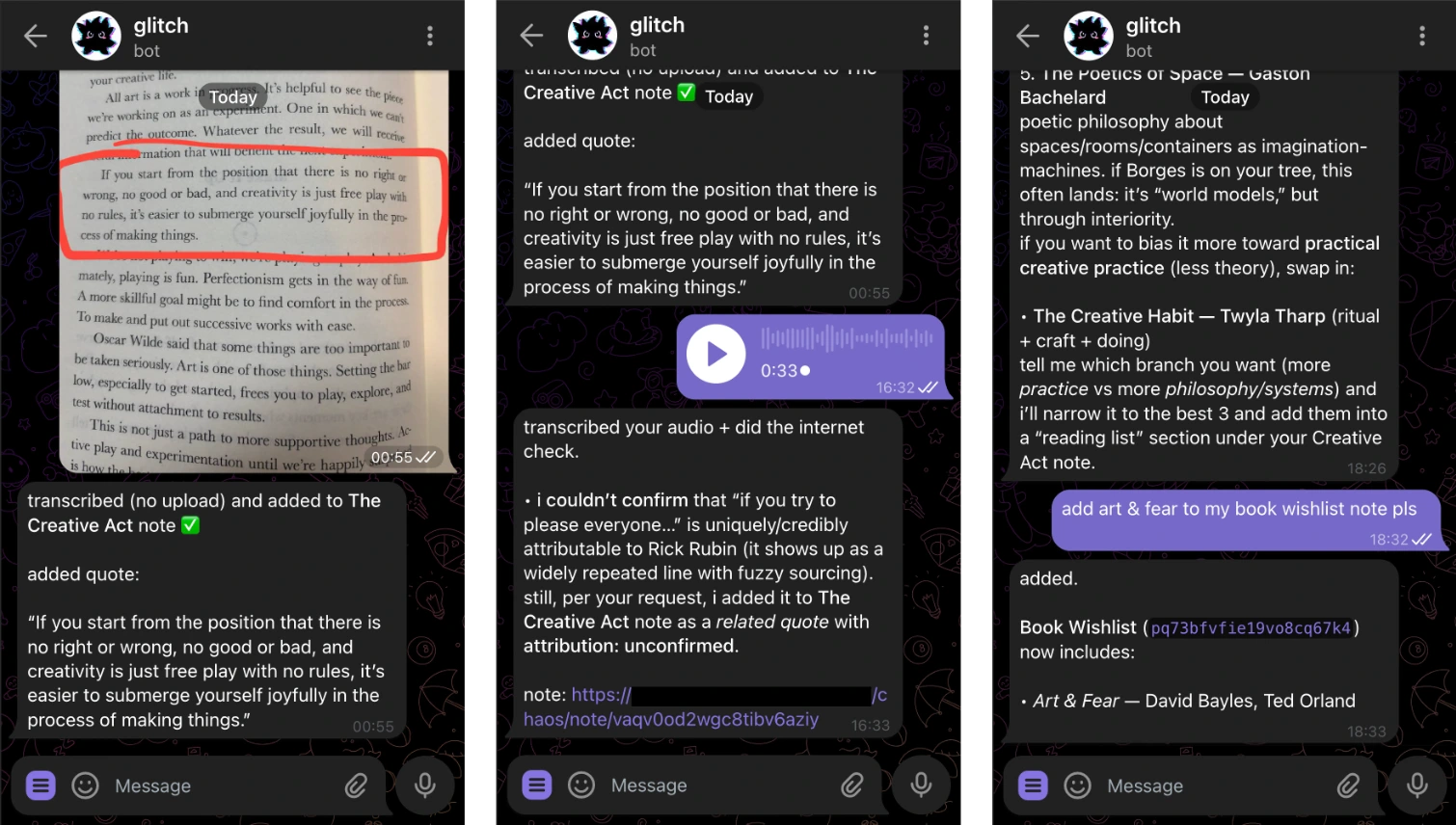
To make that constraint workable, I built a small personal assistant I call Glitch. I mostly talk to it through Telegram, which means capturing something can be as low-effort as sending a voice message, a photo, or pasting a link into a chat. Under the hood it runs on Openclaw and lives on exe.dev, with the filesystem and Github as the database. From there, Glitch can turn that input into a note, link it to related things, and occasionally surface something old when I'm working on something new. It handles the clerical work so I don't have to.
Because the agent handles that layer, Chaos can afford to be very boring underneath. One note per idea. Very little metadata. Notes are allowed to stay messy forever. There's no draft state, no refinement loop. The only thing it really optimizes for is whether the idea survived the moment it appeared.
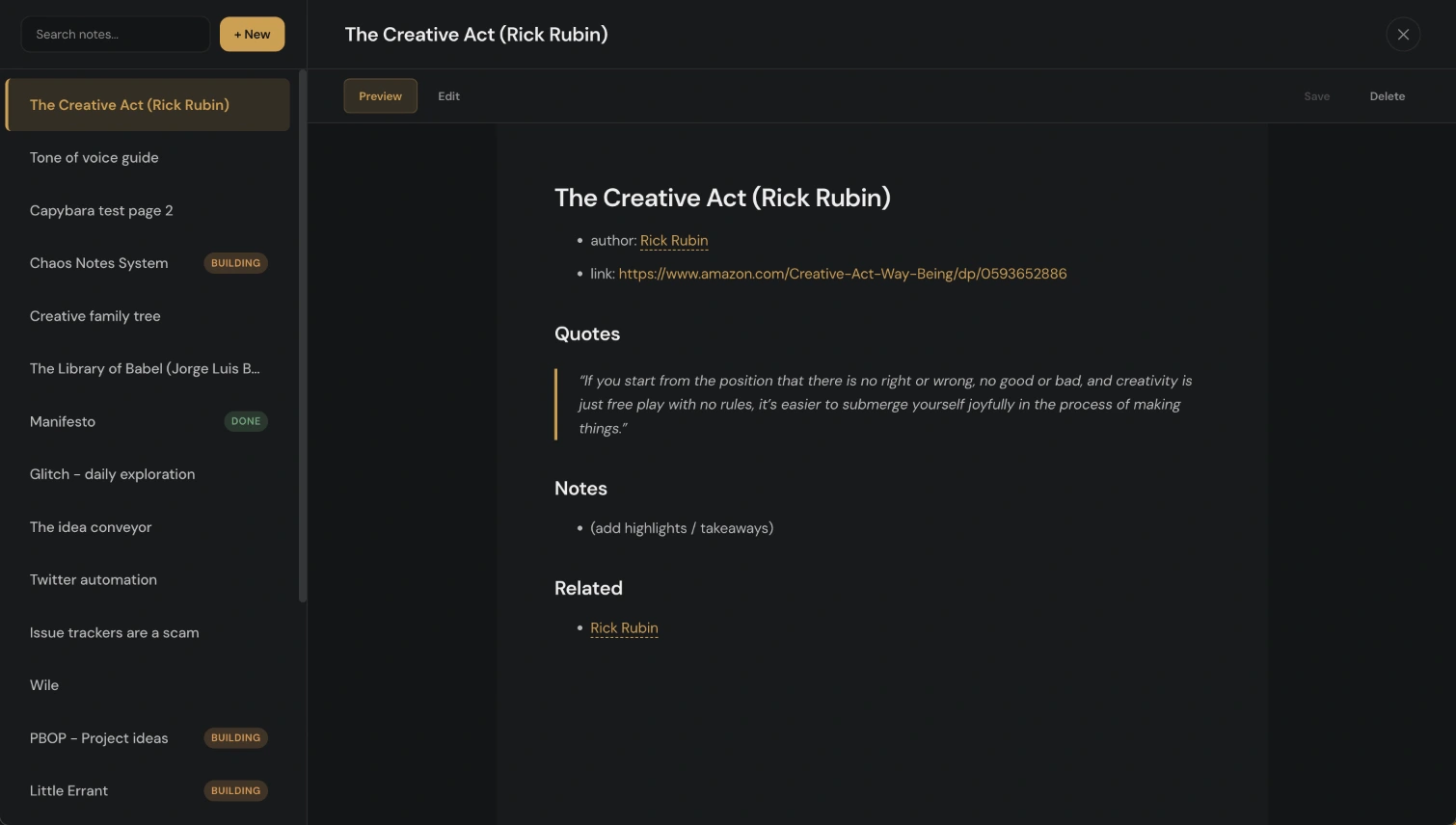
I've only recently started using this system, so I'm not claiming it's fully solved. But this post probably only exists because an idea from a few days ago didn't disappear when it normally would have. It went from half-formed notes to something finished without me having to stop and get organized in the middle of thinking.
What surprised me is that the biggest difference so far isn't productivity or output. It's that I don't feel like I have to interrupt a thought in order to preserve it.
For now, that's enough to keep me experimenting.
---
If you want to try something like this yourself, just point your coding agent to github.com/dooart/chaos and it'll do the rest.
FIELD REPORTS
From The Desk of DOOART LABS
DOOART LABS is a digital playground for creative coding, AI experiments, and over-engineered interactive toys.
This newsletter serves as the primary distribution channel for post-mortems of failed experiments, weird bugs, and the occasional success story.
Frequency: Low // Signal: High